
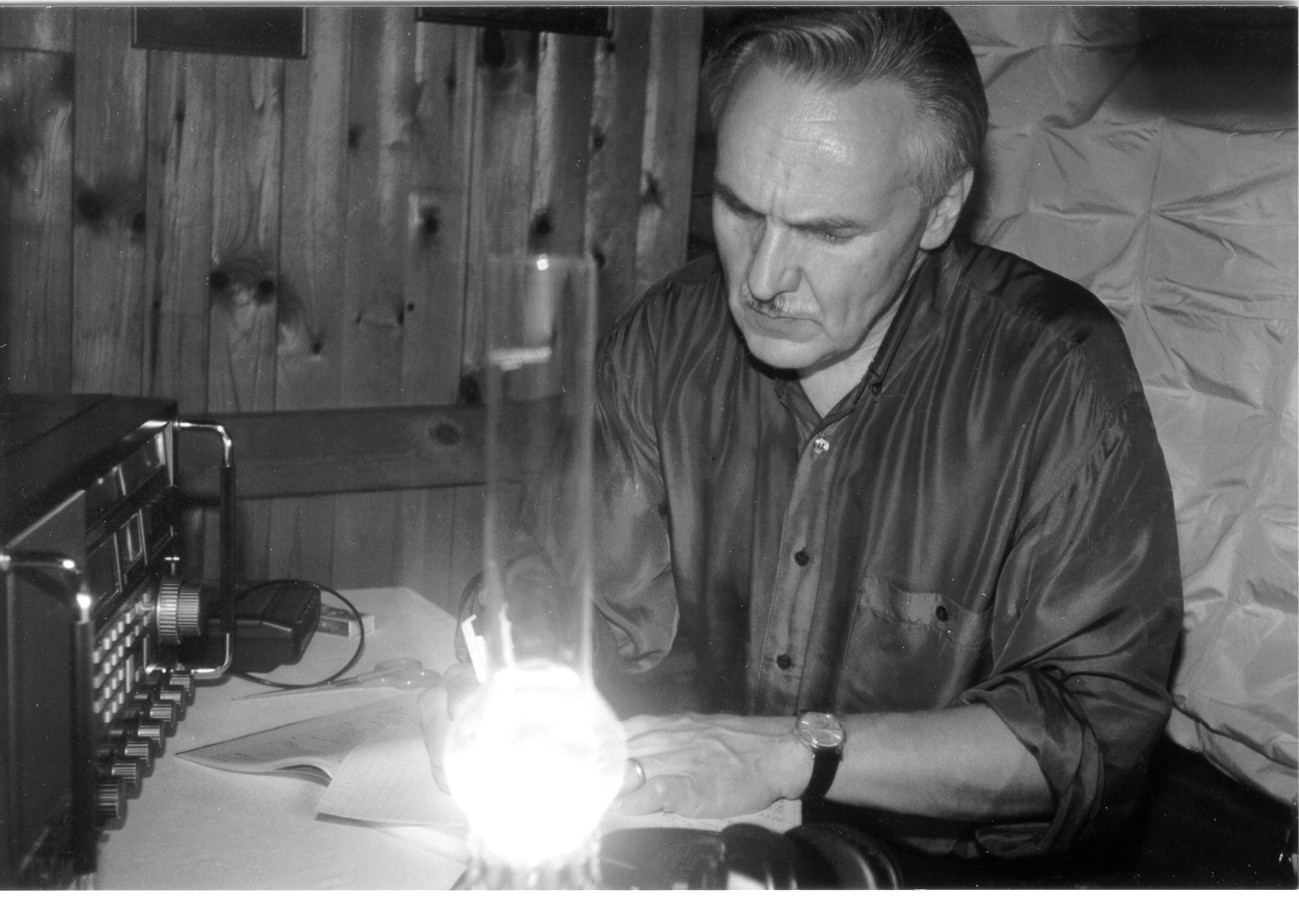
Simo Soininen – lifetime on airwaves
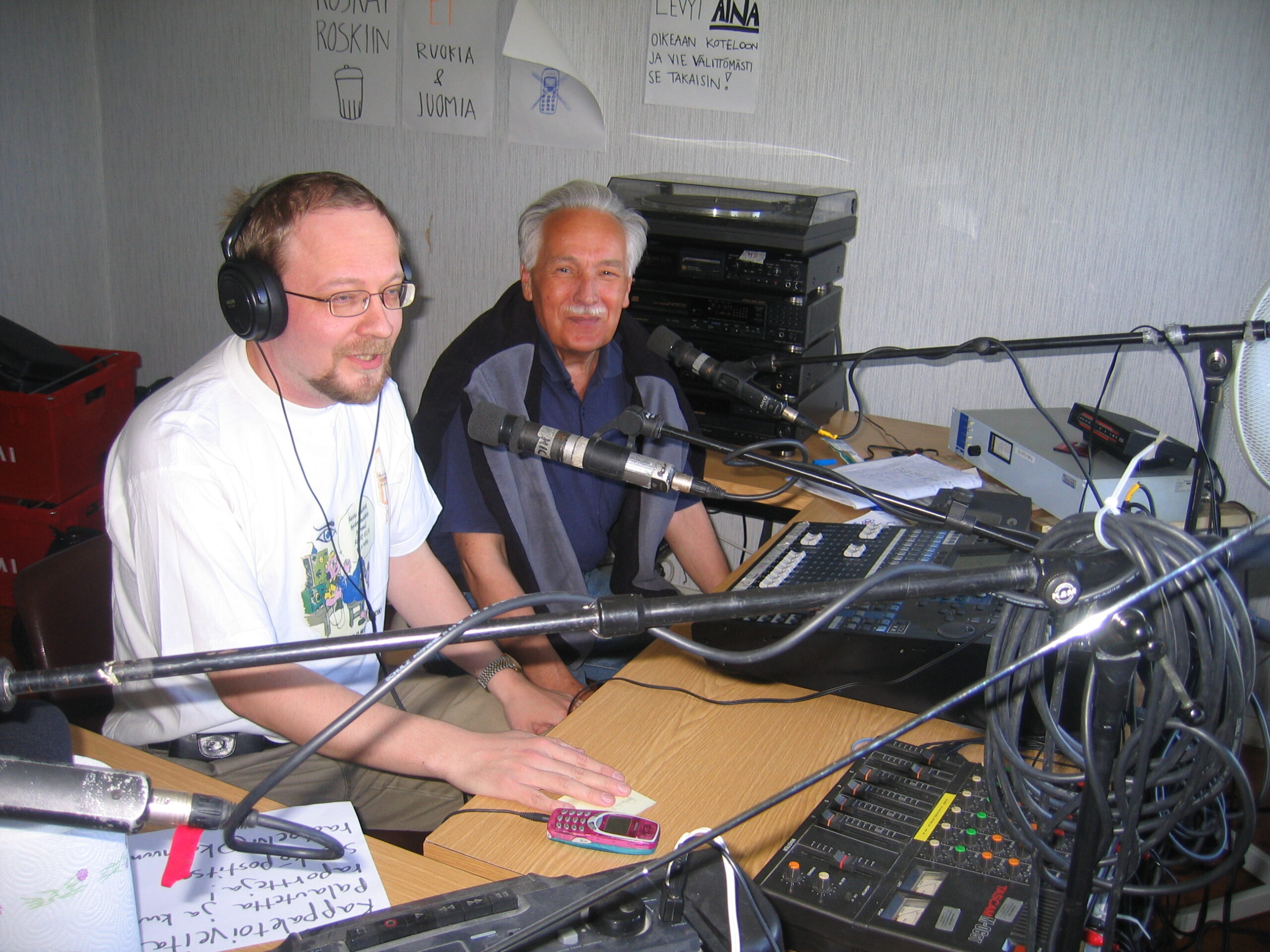
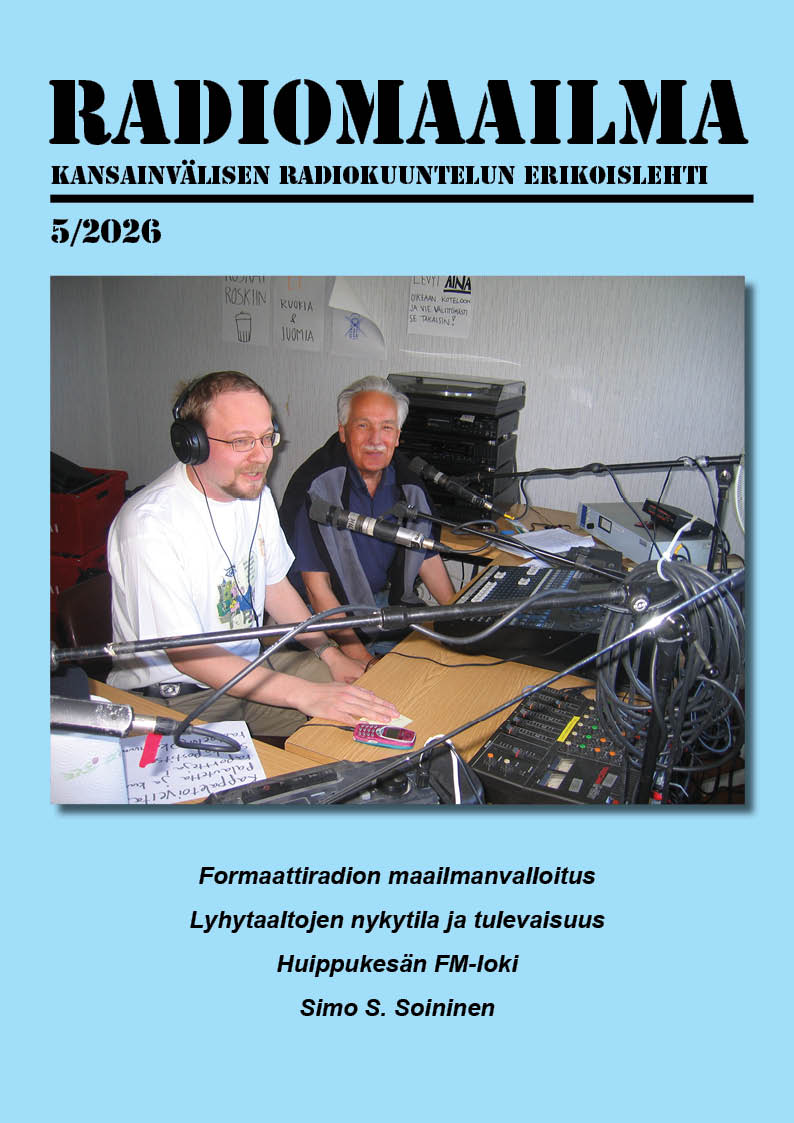
Simo S. Soininen (SSS) belongs to the generation of listeners who took up the hobby in the 1950s. A former chairman of the Finnish DX Association and former editor-in-chief of DX Kuuntelija (Radiomaailma) magazine, he still enjoys spending time with radios. Few people can match the unique stories he has to tell about his adventures on the airwaves.
Jyrki K. Talvitie once remarked that in the 1950s, the only way Finns learned about life in distant countries was when some great adventurer happened to give a lecture at Balder Hall once a year.
Yes, that was true. After the war we were a poor country, and foreign travel was rare. Finnish Broadcasting’s programmes were high-minded and educational, but there was relatively little…
…this famous kind of ”valuable and broadening programming”.
Yes, very entertaining in every respect. As a boy, I spent summers here in Kajaani with my uncle and aunt. My uncle was extremely technically minded. He bought only the very best cars and equipment available. After careful consideration, he purchased a Luxor Ambassadör receiver, which has become a truly legendary radio.
On rainy days in Kajaani I listened to it endlessly. Then another stroke of luck came along. In 1956 my uncle and aunt moved into a new apartment building. My uncle had retired, and my aunt was also nearing retirement age. The building had a functioning communal antenna system. At that time reception conditions were virtually free of interference. So I spent many hours tuning that Luxor.
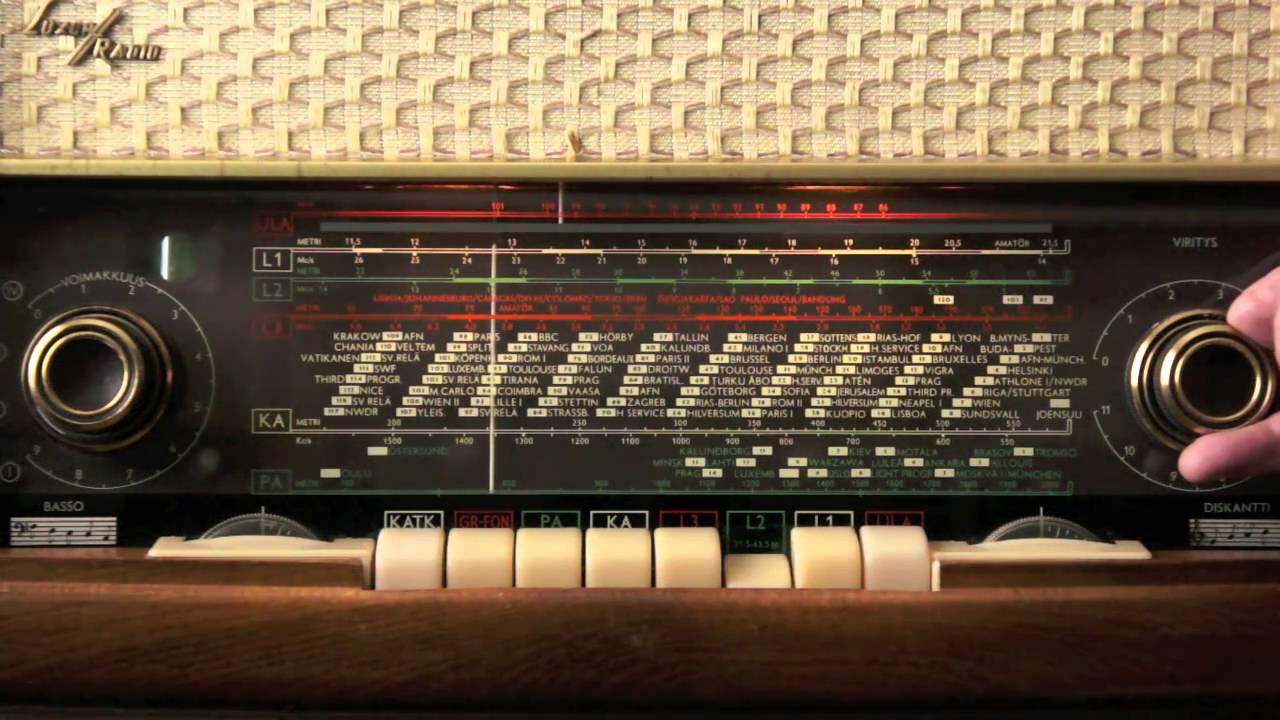
There was another unusual circumstance as well. Propagation conditions were exceptionally good, especially on the higher frequencies. The 11- and 13-metre bands were packed with stations. I remember that around ten or eleven in the evening the bands were full of various Voice of America transmitters, stations from South Africa and many other places. They came in unbelievably well.
Radio jamming still existed then, but when broadcasts arrived from the West late in the evening, the jamming had virtually no effect whatsoever.
Back home in Seinäjoki, the family had moved into a new residence provided through my father’s teaching position. Once again there was an effective communal antenna system. The family’s old Philips radio became surplus when a newer and more impressive Philips receiver was purchased. The old set ended up in the room shared by us boys.
Its tuning scale was inaccurate and stations did not appear where they were supposed to. So I began making notes of them, which was really my first proper DX listening. I undertook the large task of identifying every medium-wave and short-wave station I could hear.
One particularly intriguing mystery bothered me. I kept hearing a station called ”Sakarias”. What on earth was Sakarias? I puzzled over it for a long time until I eventually discovered that it was actually RIAS Berlin, the radio station of the American Sector, which broadcast excellent music.
Another important influence, as for many jazz fans of my generation, was the Voice of America. It provided jazz in abundance, with Willis Conover and others as hosts. We also listened to music from Central Europe. Since I had studied German extensively, I had no difficulty listening to German-language broadcasts, either.
With the radio in our own room, I could even listen through the loudspeaker. My brother was a sound sleeper, so there were never any problems. Then I happened upon Spanish-language stations. I thought to myself: what a beautiful language Spanish is. That was how my interest in languages began.
At the time, dictionaries were sold out everywhere. Eventually, through sheer luck, I managed to buy a small red dictionary. Grammar books were completely unavailable. Only later, after I was already active in the hobby, did grammar books, textbooks and better dictionaries become available. Even that little red dictionary one occasionally found in second-hand bookshops was from an old edition. It was not until the 1970s, thanks largely to Jyrki K. Talvitie’s work, that the dictionary situation improved. We really started from very humble beginnings.
How did I actually get started with Spanish? By chance, a man from Spain had ended up living in Seinäjoki. He prepared a reporting template and a standard letter for me. Through that, things gradually began to move forward. Spanish was not particularly difficult for me because I already had Latin as a foundation. With that background, one can understand quite a lot even without a dictionary. And a student of Latin must be prepared to guess half the words. Studying Latin is based on the idea that you cannot know every word; you must infer meaning logically. It is excellent mental exercise.
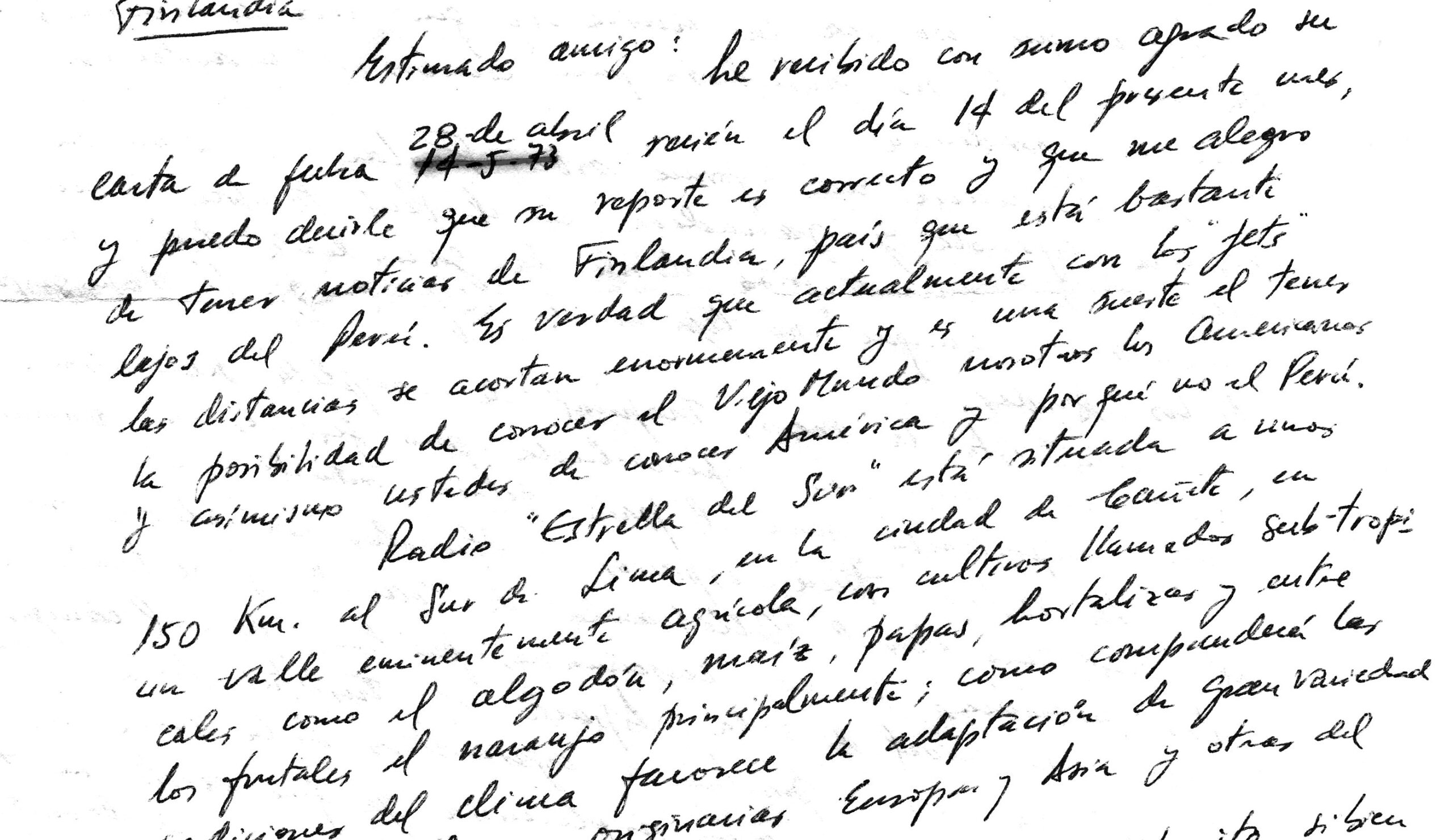
For DX listeners, Bolivia was the most exotic destination in South America. I still maintain contacts there. One of them is Roman Merida Mendelson, a farmer, owner of a large estate, radio amateur, and volunteer worker for radio stations. We remain in regular contact. In ancient times, we also had South American radio journalists attending the Finnish DX Association’s summer meetings. One legendary figure was the Bolivian journalist and producer Enrique Saravia Humérez.
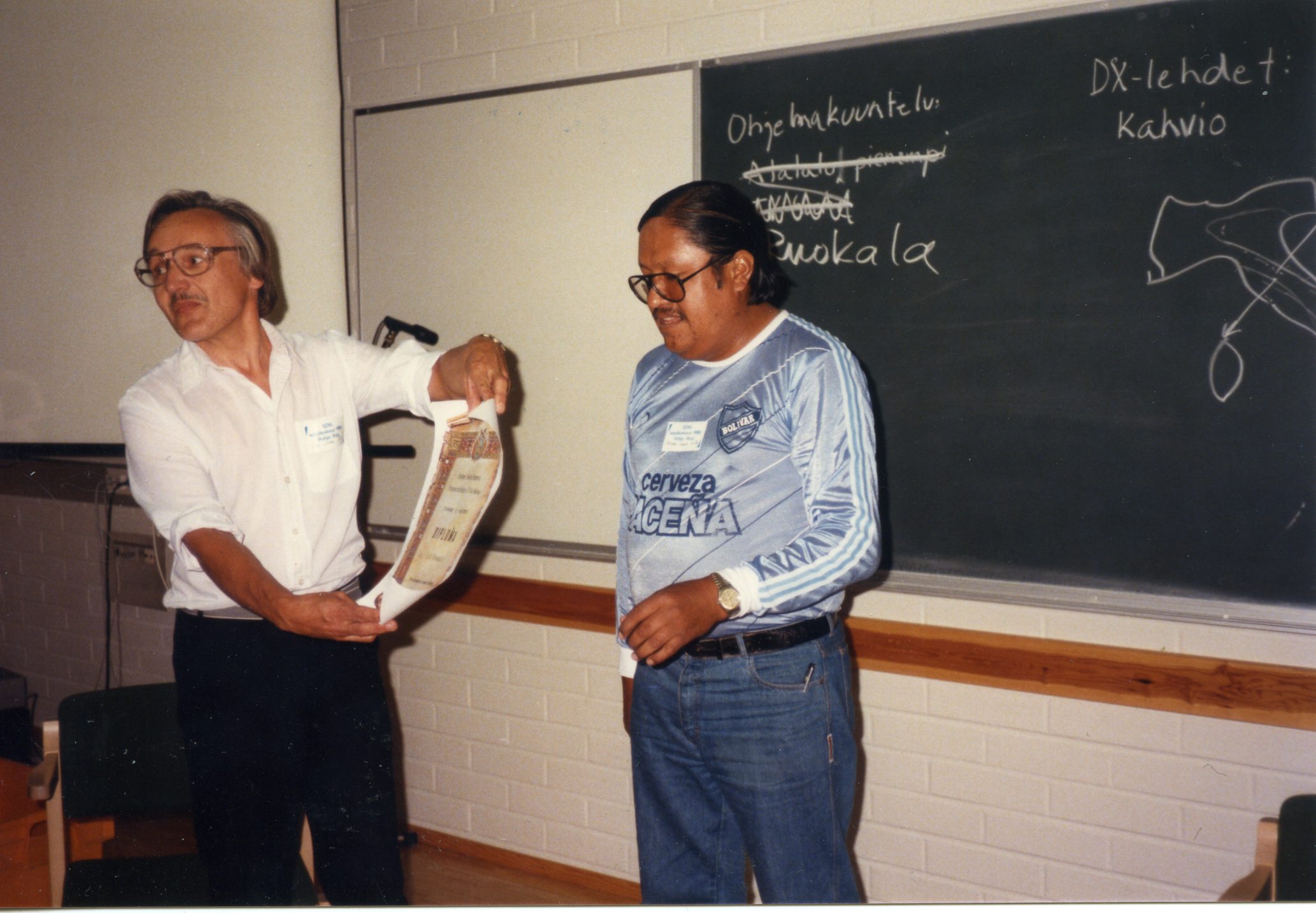
I remember him. He travelled to Europe in 1986 on Aeroflot’s inexpensive flights, presented a diploma to DX-Kuuntelija magazine, received the association’s gold badge, and was later found dead, if I remember correctly, somewhere around a port area in Yugoslavia.
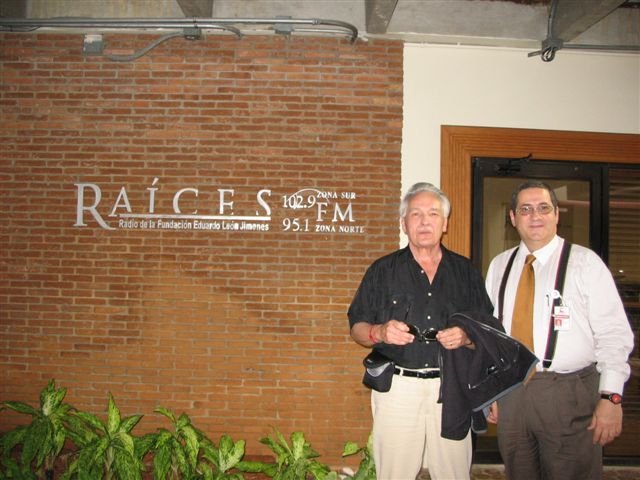
DX listening creates fascinating connections, and the quality of those contacts is remarkably high. I have contacts in virtually every South American country, as well as in Mexico. Later I developed an especially close friendship in the Dominican Republic with Teo Veras, a DX listener and owner of Radio Clarín. Thanks to him, I was able, so to speak, to enter through the kitchen door and see how things really worked.
These DX friendships have opened doors that ordinary tourists never even know exist. When your guide at a destination is a DX friend, you gain access to all sorts of experiences. In Turkey, for example, I was taken to tiny specialty restaurants hidden away in back alleys. They were never advertised. Only local people knew about them. You slipped in through some archway entrance, and inside there would be magnificent table settings and truly exceptional cuisine prepared for a select clientele.
Travelling to the Dominican Republic was an experience in itself. My old radio friend Teo Veras arrived to meet me in a limousine. We were escorted out of the airport through a VIP route, and outside a gold-coloured Mercedes was waiting. The reception I received in Beijing was equally warm. My wife often wonders how any of this is possible.
I have even visited the headquarters of an anti-Castro Cuban guerrilla movement in Miami. There I met a colonel who knew everything about Mannerheim. He asked whether he might someday be able to visit Finland and see the Battle of Raate Road. I told him he would be welcome, but unfortunately he has never appeared.
Many radio station employees carry concerns and opinions that they cannot openly express in their own countries. But because they know I will never betray them, they are willing to speak frankly to an outsider.
When you think about information and journalism in these countries, and what it means to be a radio journalist or station manager, life is not easy. Some things simply cannot be written about. The problem nowadays is that tools such as Google Translate make it possible for people to find out exactly what Soininen has written about a particular person or station.
From a traveller’s point of view, knowing Spanish also means understanding conversations in the background. The people involved may not realise that I can hear, and even understand, what they are discussing. Suddenly you discover what is really going on.
It is worth remembering that all this began before the internet existed.
Back then we wrote beautiful personal letters to radio stations, and many long-lasting correspondences grew out of them. This is one of the finest aspects of the hobby. It required tremendous dedication. You had to study languages and do research. Postage was expensive too, and always has been. Today it is downright outrageous. Sending a registered letter to South America can easily cost ten or twenty euros.
We developed all sorts of systems for handling correspondence. Eventually, however, my own reporting activity began to decline simply because it required so much work. I never really adapted to the modern forms of communication, and in truth I did not care very much. By the time communication became easy, the hobby itself was already in decline.
If only all the information available today had existed in the 1960s. In those days you needed expensive atlases just to find out where a station might be located. There were practically no reference books on South America, and if there were, they were hopelessly outdated. I ordered the English-language South American Handbook all the way from London. It was published annually and very well edited, with small stories and observations. It was not written in a dry academic style. I still have those volumes on my bookshelf.
The lack of information had one positive consequence: it forced us to learn about countries and cultures in depth. Many DX listeners painstakingly translated station brochures with a pencil in hand. We studied information that simply did not exist elsewhere.
In the earliest years, the World Radio TV Handbook did not even provide addresses for North American radio stations. Yet there was no reason to worry because the postal service still functioned properly. In the 1950s and 1960s, if an envelope contained nothing more than the station’s name, the chief engineer’s title and the city, it would still find its destination. Today a single wrong number in an address is enough for a letter to be returned. Not long ago, a letter came back from Hawaii because the station had moved across the street into a neighbouring building.”
What receivers did you use, or would you have liked to use? First there was the Luxor Ambassadör, and then the Philips…
Well, I have always had terrible luck with receivers. My first communications receiver was a National. My father, being a resourceful man, found one for me. It was a simple, inexpensive model sold by Yleiselektroniikka or a similar company at a reasonable price. Of course, at the time it still felt expensive. In the end, however, it was something of a disappointment.
I must say that the old Philips tube radios were genuinely excellent. Their selectivity left something to be desired, but in terms of AM reception they were outstanding. They had been designed as true AM receivers rather than having AM added merely as an accessory to FM, as happened later. They were astonishingly well-built radios.
Then came my student years in Turku, where I continued listening with a Philips receiver, concentrating almost entirely on medium wave. Once again fortune smiled on me. I lived in a new apartment building on Hämeenkatu 7. The communal antenna system was excellent and there was virtually no interference. Fortunately my wife was a sound sleeper, which gave me every opportunity to listen at night as well.
The Philips I had in Turku was actually defective. No one could be found who knew how to repair it properly. Because of the fault, it became extraordinarily sensitive at the lower end of the medium-wave band. I remember Jyrki K. Talvitie asking how people managed to hear stations at the bottom of the band. I told him the secret was simple: use a faulty receiver.
The next stage came when Pertti Äyräs was serving in the military. I borrowed his PCR-3 receiver, an aircraft communications receiver that was absolutely superb. It was so ugly that my wife insisted I keep it hidden beneath the kitchen refrigerator. But it was magnificent.
There were occasions when so many stations came in that, even as a student, I did not have enough time to report them all. It was impossible. There were nights when twenty Colombian stations would appear one after another.
Recording stations was difficult in those days because everything was done on open-reel tape. Producing a tape report was a major task in itself. Those recordings still exist, and it is great fun listening to them now. With the experience I have gained over the years, I have even identified new stations from old recordings.
A memorable episode occurred in 1969 when I was employed at the University of Turku. I had an excellent relationship with the university language laboratory, which possessed a Braun T-1000 CD receiver. The Braun T-1000 was outrageously expensive. The university had purchased it for language-recording work.
Every Friday evening I was allowed to carry the receiver carefully home to my apartment opposite the university on Hämeenkatu. With that radio I was able to do some truly serious DX listening.
After the Turku years, life took me to Helsinki, to Seljatie. Unfortunately, I made the mistake of taking out a bank loan to buy a Drake R4B. It was a calibrated communications receiver, but the audio quality was dreadful. Good heavens, it was not a particularly good radio at all. Pertti Äyräs built a medium-wave converter for it, but even then I never managed to achieve any really satisfying DX results.
Later, after I donated the R4B to a technically skilled friend here in Helsinki, he told me that in all his life he had never heard worse audio than that produced by a Drake R4B.
My salvation came in the form of the good old Trio 9R-59. I realised that sometimes older equipment really is better. Add a digital frequency counter and you could hear practically anything with it.
So my receiver history has been, shall we say, unfortunate, confusing and rather winding. I gained access to a truly decent receiver far too late. Even that was not top-of-the-line equipment: a Grundig Satellit 600.
The jewel of the final phase of my DX career was my cottage in Sotkamo. It was remarkable. On the Helsinki area bands, stations might be barely audible through noise, yet in Kajaani, for some reason, they came through perfectly free of interference. In winter I would tow the Grundig Satellit 600 across the ice on a sled while skiing to the cottage.
Another important chapter was the Lapland DXpeditions. The first took place in the 1970s, and my usual companion was the trusty old Trio. But I also listened with a Selena and a Riga-104. With the Riga I once heard KSPO in Spokane, Washington, running only 250 watts, somewhere in the Kilpisjärvi region of Lapland. So yes, I have used all sorts of machines during my lifetime. Every one of them brought its own experiences and memories.
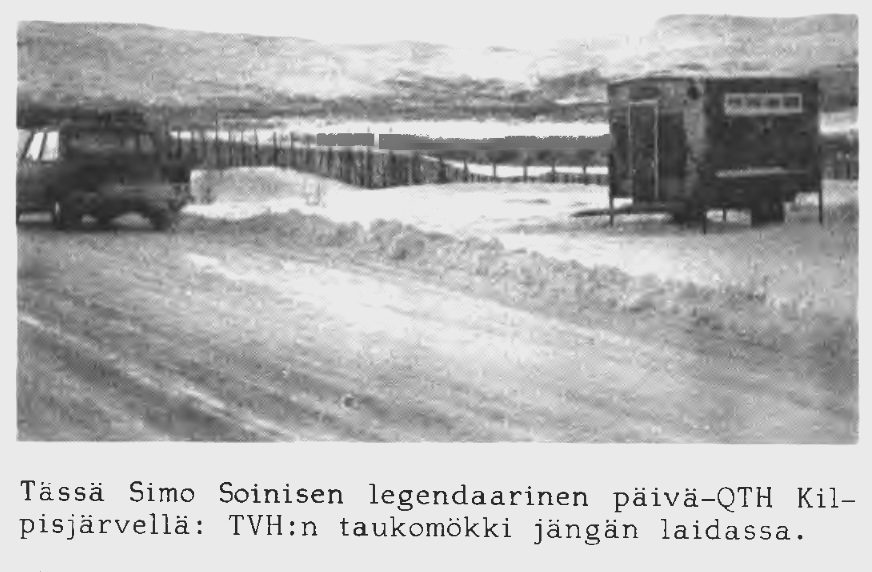
One of the famous episodes from the Lapland expeditions concerns the signs reading “CFCW Listening Post” that were attached to a road maintenance cabin. There are probably still photographs of it somewhere.
That’s absolutely true. At the time I worked for the University of Helsinki, which meant I could use university facilities for a nominal fee, practically free of charge. We stayed at the biological station in Kaamanen.
But Kaamanen had one major drawback: putting up antennas. In the direction of North America there was Lake Muddusjärvi, and it wasn’t even frozen properly. Water flowed onto the ice from the surrounding fells. It wasn’t a particularly attractive place for hauling out long antennas.
When a group of DX listeners is gathered together, receivers tend to interfere with one another. Across from the biological station stood a road authority maintenance depot, complete with snowplows and other equipment. I asked whether it might be possible to use their break cabin.
Nor was this the first time. I had done something similar in Karesuvanto. On that trip the cabin was rather cold, and we occasionally warmed ourselves in the upper floor of a local house. The actual listening post was the maintenance cabin. It stood on a small slope, giving us a modest rise toward North America and the west. We carried coils and equipment on our backs through the twisted mountain pines and headed out into the wilderness.
We heated the cabin with a gas heater, listened to CFCW in high-fidelity quality, and proudly announced the fact on the cabin wall.
There is a genuinely athletic and outdoors-oriented aspect to DX listening. You move through difficult terrain, in snow one-and-a-half or even two metres deep. Sometimes you suddenly sink almost up to your armpits. Then, dripping with sweat, you try to string out antennas. There is a certain elegance to it all.
The reward, of course, is completely interference-free reception. That’s something quite special. As I recall, our entire arsenal consisted of a couple of Selena receivers and a primitive tape recorder. The only drawback of those expeditions was that more stations came in than we had time to report.
Lapland also had an interesting social dimension. In Kaamanen we stayed at a former research station that had fallen out of use. On university land they had been developing the now-famous puikula potato, which was then a novelty. The old research station had a potato store in the basement.
We happened to have with us the gourmet enthusiast Hannes Tuomi, who suddenly found himself with access to endless quantities of fresh puikula potatoes. There were tons of them.
These trips also created fascinating connections with local residents. To them we listeners became something of a legend. There we were, wandering around the wilderness carrying mysterious coils on our backs, and people probably felt sorry for us, thinking, ’Those poor fellows are surely going to get lost out there and be eaten by wolves.’
On one expedition, thanks to contacts through the European DX Council, we had some Italians along. We stayed at a summer cottage owned by Valio. One of the Italians had brought along a master chef, who looked after us wonderfully.
So these trips were not all hardship and snowdrifts. At times we lived in remarkable style and elegance. The tradition continues even today. Modern DXers go to Lapland and fill social media with photographs of fine wines and gourmet meals. It is a deliberate escape from everyday life.
For Italians, Finnish DX listening represents the pinnacle of the hobby and a form of exotic adventure. I was fortunate that the university was liberal and supportive enough to provide facilities for our use. Technically there may have been a fee involved, but I never actually received a bill.
You have also been actively involved in association work.
One remarkable aspect of the DX community is the variety of people it attracts. Among our members are leading professionals from all kinds of fields: auditors, economists, specialists and experts of every sort. The diversity is genuinely educational if one has the wisdom to appreciate it.
This is not a group that can live inside a bubble. The people are simply too different and too interesting for that.
The hobby teaches tolerance and offers rewards in many different ways. I have had the privilege of working with people who can be trusted. When they are given a task, they do it. These are independent individuals who have always spared no effort in getting things done properly. They deserve sincere thanks for that.
I must say that the quality of the voluntary work has been exemplary, especially when compared with the confusion one sometimes encounters in other organisations. Somehow we have largely escaped those problems.
We also have strong traditions. The annual summer meetings are a good example, as was the active local chapter work in earlier decades. Another major strength has always been our culture of advice and encouragement. Nobody is ridiculed for asking questions. The aim is not to embarrass people but to help them understand the hobby. The atmosphere is respectful and genuinely pleasant.
At one time DX listening had the unique advantage that it allowed people to follow world events better than almost any other medium. And you have actually heard major world events unfold live from the very heart of international crises.
One evening in Turku I was working on some university studies with the radio on and the Voice of America playing in the background. Suddenly the transmission was interrupted. It was fairly late in the evening, and then came the announcement that President Kennedy had apparently been shot. People sometimes ask, ’Where were you when Kennedy was shot?’ Well, I was listening to the Voice of America.
That is probably the most dramatic event I remember. Over the years I have also heard broadcasts from situations where power changed hands somewhere in the world and excited voices echoed through the airwaves. But I never witnessed anything like a presenter being shot while on the air.
During the Romanian Revolution, Romanian Radio repeatedly aired recordings of the show trial in which Nicolae Ceaușescu was accused and eventually executed.
I have such an absurd memory connected with Romanian Radio. I was at my parents’ farm in Ostrobothnia, listening on a long-wire antenna during what was probably a skiing holiday. On Sunday mornings Elena Ceaușescu would recite her own poems on the national network. It was certainly… well, wonderful.
But many times something happened that people today find hard to believe. The propaganda broadcasts aimed at foreign audiences were often vastly superior to the domestic programming of the same country. The Soviet Union was an excellent example. They did not dare broadcast complete nonsense to listeners abroad. The worst excesses were filtered out.
In a sense, this created a false image of the country, a more attractive one than reality, because the journalists were often more intelligent and more worldly than the political leadership. And when I think of the BBC, where I have visited, I remember a genuinely pleasant atmosphere.
What went wrong, in my view, was the closure of many shortwave international services. They were tremendously important in building a country’s image abroad.
The last time I visited Vatican Radio in Rome, a journalist told me that it was a wonderful place precisely because of the interaction between people from different countries. Foreign journalists brought the perspectives of their own cultures into the editorial work while producing programmes together.
One of the greatest mistakes made in Finland was the termination of Russian-language broadcasts. Cost-cutting policies led not only to the loss of expertise but also to the loss of hundreds of thousands of listeners.
I once visited the Finnish Broadcasting Company and saw a table in the Russian-language department covered with letters from Ukraine. The audience certainly existed. Yet the service was shut down, and now restarting it is no longer realistic. Those listeners have already been lost. Perhaps some long tail of influence would have remained had the broadcasts continued.
But this is merely the rambling of an old man. Those who indulge in wishful thinking hope the old days will return, but unfortunately they never do.

Today DX listening is essentially focused on medium wave and FM. What is your view of modern DXing?
Unfortunately, time has passed this hobby by. Shortwave is no longer the gateway it once was. It was an easy entry point because antennas were simple and interference was minimal.
Today there are mainly European medium-wave stations to hear, together with a few Chinese and Romanian shortwave stations. Anyone taking up DX listening now must either travel to Lapland and string out long-wire antennas or concentrate on FM-DXing. A few rungs are missing from the ladder compared with the old days.
Radio itself is no longer such a fascinating device, nor is there any real need to use it as a source of music. The paradox is that we have moved from a severe lack of information to the exact opposite extreme.
There are now millions of songs available, hundreds or thousands of radio stations, and everything is only a click away.
But then we have this wonderful new phenomenon known as the KiwiSDR. Around the world there are listening stations that we can access through our own computers.
Had someone talked about such a thing twenty years ago, people would have called for an ambulance and had him taken away for observation. The development has been astonishing. Sometimes one ought simply to stop and reflect, with gratitude, on what has actually happened.
How does the KiwiSDR world look through the eyes of a veteran DX listener?
It is quite remarkable, and naturally I decided to try it. These days I no longer listen with a collector’s mentality. I do not feel any need to compete for catches. I prefer to leave the Finnish Kiwi receivers for the more active enthusiasts.
Instead, I discovered an Icelandic KiwiSDR. It uses a vertical antenna located beside a lighthouse on the westernmost tip of Iceland, maintained by an Icelandic radio amateur who happens to be a lawyer. What fascinated me was that the omnidirectional vertical antenna reminded me of the communal antenna systems of my youth. I thought: let’s see what can be heard with this thing.
It turned out to be a fascinating experience. In 2020 and 2021 there were still excellent propagation conditions. Every single morning seemed to offer opportunities.
At my age, however, I am not about to get up at five or six o’clock. Depending on the Icelandic spring conditions, I begin listening after breakfast at around nine.
The challenge with that Icelandic receiver was that users were limited to a two-hour time slot. Only after a couple of hours do you begin to understand where signals might be coming from. That is when California, Alaska and Pacific stations start becoming accessible. Two hours pass incredibly quickly.
These Kiwi receivers come complete with maps, station databases, tables and recording functions. I have an old computer filled with recordings made through them.
I also discovered Paraguay, which is a delightful DX country and absolutely wonderful in terms of music. The country is enjoying a period of growth, and its medium-wave stations are in excellent condition.
One reason why so many stations are now audible is that Venezuela has largely disappeared as a dominant presence. Venezuela used to be a major obstacle to hearing other stations, but no longer. As a result, there is more Bolivia, Peru, and especially Colombia.
Colombian broadcasting remains of high quality despite being commercial. They say the most beautiful Spanish is spoken in Colombia, and there still seems to be a trace of cultural refinement in Colombian radio that has largely vanished elsewhere.
Once my two-hour slot has expired, I start searching for some exotic corner of the world. That has become my hobby now: exploring remote edges and forgotten places, as far away as possible. Those places are often the most interesting. Tierra del Fuego, for example.
Interview by Jari Lehtinen in Kauniainen, Finland, 16 January 2024.


Vastaa